Athletics were a way to get popular back in the day, and with his 50 year high school reunion approaching, Zach went to the gym weekly to develop his bod. The other kids would have to like him this time around. As he imagined the payoff scene, there would be something to use as an improvised pull-up bar, and he would reel off a few, to the acclaim of his peers. On his best day at the gym he got his chin up over the bar twice.
Things got funnier, and meaner. One Friday in August, his gym routine included a stint on a machine for developing the lower back by sitting crouched over, then straightening up against weight. The back pain started when he got home and peaked that Wednesday. When the reunion happened a month later, Zach stooped at what he hoped was only 20° from erect, could hobble only short distances before he needed to lean against something or sit down.
…… …… …… …… …… …… …… …… ……
Las Lomas HS 50 year Reunion Socializer
September 28 2018, Pinky's Pizza & Bar
Pinky's is north of Ygnacio on Broadway next to a Toyota dealer, on a block that includes a couple of storefront gyms and a car wash. This is the commercial strip side of Walnut Creek's Main St. corridor. Swank Broadway Plaza, with it's topiary hedges, is one mile south; Las Lomas is a mile further, on the edge of downtown. Pinky's exterior is drab, but inside there's a large open area between a long bar and high tables that is suitable for mingling; a nook for kids wanting to commune with pinball machines; and a courtyard with tables separated by greenery, suitable for adults needing space for personal conversations.
At first glance Zach recognizes exactly nobody. It's noisy and crowded, but not a bad venue from the standpoint of the mobility impaired. If he hangs around the bar, there are enough counters to lean for him to get around like a billiard ball on a pool table with extra pockets. Conceivably. Zach makes his name tag, goes to the bar to get a coffee, and wouldn't you know it, the first person he meets is Albert. They only recognize each other from their tags, although Albert had been a pudgy, bright, cheery kid, and now looks the part of a portly, urbane, elderly gentleman.
They'd become casual friends as Las Lomas freshmen because Albert was an honor student, and Zach wanted in to the smart kids club. The next year, Albert's family rescued him when he had nowhere to stay. They never talked about that afterwards, and drifted apart after the '60s hit in their senior year: drugs finally provided a club that Zach could join, but one which Albert wanted no part of. They had not spoken since graduation, and Albert updates him on his continued successes in adult life.
"For the last 14 years I was an editor at the Washington Post, now I'm retired. They offered me a year and a half contract buy-out after Bezos bought them, and that took me to 66, so." Albert shrugs.
"Kids?"
"Two, daughter and son. Daughter's doing good, she's an architect, married, husband treats her right. My son suffers from depression … How severe, good question. He loves to travel, he has his own place and he keeps it clean, more or less, he's had friends. But no job, we support him."
"Kids?"
"Two, daughter and son. Daughter's doing good, she's an architect, married, husband treats her right. My son suffers from depression … How severe, good question. He loves to travel, he has his own place and he keeps it clean, more or less, he's had friends. But no job, we support him."
"That's a lot of dough!" Zach says, thinking Albert wants acknowledgment in the ample resources dept. Albert looks bemused, so Zach develops the troubled adult child theme instead. He tells Albert about his daughter, who also suffers from depression, plus she was a drug addict. But just this month, she earned her 1-year clean and sober pin. "It's never too late," Zach says, "hang in there." Albert smiles appreciatively.
"I've been paying part of his rent at his sober house, we have this arrangement, he shows me his W-2s …" Zach trails off because Albert looks bemused again, this time with a contemptuous edge. Zach realizes that he marred the moment by sneaking in a brag about money.
Albert says "my wife refuses to pay for more of his travel expenses," then looks past Zach for his next tagged conversation. The two men ease past each other.
"I've been paying part of his rent at his sober house, we have this arrangement, he shows me his W-2s …" Zach trails off because Albert looks bemused again, this time with a contemptuous edge. Zach realizes that he marred the moment by sneaking in a brag about money.
Albert says "my wife refuses to pay for more of his travel expenses," then looks past Zach for his next tagged conversation. The two men ease past each other.
… … …
The only thing Zach remembers about Beth from the old days is her name, but that's enough. "Still working, designing databases. Living in New York, it's OK, but thinking of moving back to California. What about you, are you seeing a lot of people you know?"
Zach notes the "I'm thinking," not the "we're thinking," notes the California. Beth's attractive, they could talk tech. A furtive glance handward detects no rings. He's had another type of fantasy, and one of the tamer versions is to whisper a confidence to an available woman. He draws toward Beth and whispers "I'm seeing a lot of people I pretend to know after we read each other's name tag."
Beth laughs and nods, but maintains a reserve. He tells her his story: now he teaches Adult Ed classes in basic computer skills, like keyboarding and spreadsheets; before that, a 20-year stint programming computers at Wells Fargo ending in a layoff. A gaunt man appears at her elbow and studies Zach skeptically. "No offense," he says, "but we underrated you. Nobody thought you were that bright."
"You were right the first time," Zach says, laughing guardedly. It's Carl, who'd always been a big, round friendly guy. Now he's edgy and looks seriously unwell.
"What happened?", Beth asks.
"Good question. One day I was talking to my brother on the phone, and the next thing I knew I was lying in a hospital bed. They told me the problem was dehydration. When they let me out I lost my appetite, can't explain it. 215 before, now I'm 150."
"Still teaching," Beth says, concerned.
"Still working, but stopped being a teacher a long time ago. The problem was I cared too much about whether the kids were learning anything. Next job was owning a bar. Or I should say it owned me. For years I started work at 6:30 in the morning and finished at 2:30 in the morning, 5 days a week. Learned everything there was to know about spirits. I was a real sommelier. Then someone made me an offer I couldn't refuse. I sold, got a job in a liquor store, that's what I was doing when it happened. Now they want me back, and I said OK, on two conditions: just two days a week, and no supervisory responsibilities. Life could be worse." He cracks a smile, the old Carl shining through.
"Buy you a drink?" Carl asks, "they serve a single malt whiskey you should try." Beth smiles her consent. Carl loops his arm through hers and they set off, moving easily together will all the grace and strength the occasion requires.
Zach notes the "I'm thinking," not the "we're thinking," notes the California. Beth's attractive, they could talk tech. A furtive glance handward detects no rings. He's had another type of fantasy, and one of the tamer versions is to whisper a confidence to an available woman. He draws toward Beth and whispers "I'm seeing a lot of people I pretend to know after we read each other's name tag."
Beth laughs and nods, but maintains a reserve. He tells her his story: now he teaches Adult Ed classes in basic computer skills, like keyboarding and spreadsheets; before that, a 20-year stint programming computers at Wells Fargo ending in a layoff. A gaunt man appears at her elbow and studies Zach skeptically. "No offense," he says, "but we underrated you. Nobody thought you were that bright."
"You were right the first time," Zach says, laughing guardedly. It's Carl, who'd always been a big, round friendly guy. Now he's edgy and looks seriously unwell.
"What happened?", Beth asks.
"Good question. One day I was talking to my brother on the phone, and the next thing I knew I was lying in a hospital bed. They told me the problem was dehydration. When they let me out I lost my appetite, can't explain it. 215 before, now I'm 150."
"Still teaching," Beth says, concerned.
"Still working, but stopped being a teacher a long time ago. The problem was I cared too much about whether the kids were learning anything. Next job was owning a bar. Or I should say it owned me. For years I started work at 6:30 in the morning and finished at 2:30 in the morning, 5 days a week. Learned everything there was to know about spirits. I was a real sommelier. Then someone made me an offer I couldn't refuse. I sold, got a job in a liquor store, that's what I was doing when it happened. Now they want me back, and I said OK, on two conditions: just two days a week, and no supervisory responsibilities. Life could be worse." He cracks a smile, the old Carl shining through.
"Buy you a drink?" Carl asks, "they serve a single malt whiskey you should try." Beth smiles her consent. Carl loops his arm through hers and they set off, moving easily together will all the grace and strength the occasion requires.
… … …
Dave is one of the people Zach whispered to Beth about, not even name recognition. Fortunately, he's very talkative. "I was a mechanical engineer. Actually I didn't design anything. I mean I did at first, but then it turned into more like sales. Can you believe it, I studied engineering so I would never have to write a sentence, and ended up using words to get people to like stuff."
"Life."
"The first thing I sold was a magazine … not something you read, something you load into a machine gun. I could describe one in a way that made you think it was the coolest thing, made the army want to buy it. This year they said please come back for just one more project. It was a personal solar panel for the Marines, so I said OK." He looks at Zach expectantly.
Zach thinks Dave wants him to say something like 'thank you for keeping us safe and green.' Forget it. But 'America always seems to find a path to her next war' would not quite do either. He feigns distraction and turns, and there's Erica, with the same last name as Dave. Erica nods hello to him, and Dave high-fives one of the friends clustering around him.
"His brother died when he was in high school," Erica says, "landmine. After that no draft, no going away to college, his parents needed him around. He finally did get into Davis. He was different, everyone there wanted to party, and sometimes his mom would call him when she had nightmares.
"We met years later, playing polo … no, the kind with horses. So we had that, and in a weird way, we bonded over responsibility too. My dad was always like, a half step away from a nervous breakdown, but he and my mom tried to work things out. She was the one who had jobs, he was the one who stayed home and cooked meals, even made us Halloween costumes. So it was the middle of the night, the summer before my senior year, and I woke up to the sound of the sewing machine going downstairs. Then I heard my mom say 'please honey, put some clothes on,' and then my dad said 'don't worry about MY clothes when I'm trying to get Erica's angel outfit ready for the Christmas pageant.' I got dressed myself and stood around while mom tried to convince him he needed help. I went with them to the hospital, you know which kind. And I went back with her the next day when dad tried to sign himself out. From that time on, mom and I were equals."
"I have a kid sister and a kid brother, both of them blamed mom for dad's episode. Like if she had not demeaned him by making him do housework, he would have been OK. Things were so different then, the whole gender role thing."
"Ford vs. Kavanaugh?"
Erica's eyes flash with anger. "That's how they talk, the boys like Kavanaugh. At my school, Catholic girls were supposed to be easy, and so you wonder 'should I be easy,' not 'how can I stand up for myself.' And then if something happens, it's your fault for being easy! It's so unfair, but I let myself be be ignored. And it's so much work just to keep fending a boy off. Even now, I'm not sure if you could say I was raped."
"Life."
"The first thing I sold was a magazine … not something you read, something you load into a machine gun. I could describe one in a way that made you think it was the coolest thing, made the army want to buy it. This year they said please come back for just one more project. It was a personal solar panel for the Marines, so I said OK." He looks at Zach expectantly.
Zach thinks Dave wants him to say something like 'thank you for keeping us safe and green.' Forget it. But 'America always seems to find a path to her next war' would not quite do either. He feigns distraction and turns, and there's Erica, with the same last name as Dave. Erica nods hello to him, and Dave high-fives one of the friends clustering around him.
"His brother died when he was in high school," Erica says, "landmine. After that no draft, no going away to college, his parents needed him around. He finally did get into Davis. He was different, everyone there wanted to party, and sometimes his mom would call him when she had nightmares.
"I have a kid sister and a kid brother, both of them blamed mom for dad's episode. Like if she had not demeaned him by making him do housework, he would have been OK. Things were so different then, the whole gender role thing."
"Ford vs. Kavanaugh?"
Erica's eyes flash with anger. "That's how they talk, the boys like Kavanaugh. At my school, Catholic girls were supposed to be easy, and so you wonder 'should I be easy,' not 'how can I stand up for myself.' And then if something happens, it's your fault for being easy! It's so unfair, but I let myself be be ignored. And it's so much work just to keep fending a boy off. Even now, I'm not sure if you could say I was raped."
…… …… …… …… …… …… …… …… ……
Las Lomas HS 50 year Reunion
September 29 2018, Elks Lodge
Go a few blocks south past Las Lomas on Main Street, turn left on Creekside Drive, cross a bridge over the San Ramon Creek and go up a small hill, and Elks Lodge #1811 is on your right. In a quarter mile Creekside crosses another bridge over the San Ramon. The route between the lodge and the inner bridge is lined with flourishing trees, which at one point make a canopy over the road; you sense the deep presence of water. This part of the San Ramon is pristine, with foliage so dense that the only view of the beautiful water-carved rock in the creek bed is from the west side of the inner bridge. The San Ramon stays wild until it is joined by Las Trampas Creek and becomes a culvert, in the part of downtown Walnut Creek once called Botelho Island.
When the Lodge was completed in January 1960, Creekside between Main and the inner bridge was lined with fruit and walnut orchards. They've since been cut down to make way for apartments and condos. Could be worse: the buildings are attractive, the landscaping inviting. From the lodge parking lot, you can just see the surrounding hills rising over the tops of oak and buckeye trees. The hills change color from beige to green under steady rain, and after the sun comes out again, young children improvise sleds out of cardboard boxes and go scooting down through the dry grasses.
The Lodge itself is a one-story building, and from the outside it looks like a slightly larger version of the suburban ranch-style homes many of the class of '68 grew up in. But once inside, the high wood-paneled ceilings have the feel of cozy grandeur. There are two main rooms, the Bar and Lounge, and the Dining Hall, each of which can accommodate multitudes. The so-called Bar and Lounge is more like a meeting hall, with space for a modest bar in one corner. A magnificent Elk's head is mounted at the far end of the Dining Hall.
Zach, the billiard ball who finds his pocket and stays put. That's his stretch goal when he enters the Elks B & L, and sees a teeming throng in a huge room. There are no counters to lean on, except when you got your turn ordering from two overwhelmed bartenders. And just three chairs, all behind the table with the reunion directories and the pre-made name tags with yearbook photos. One of the three is vacant. Zach makes a slow beeline for it, sitting next to the name tag dispenser. Someone who doesn't look closely might think he is filling an official capacity. He opens a directory.
Fran would be coming. She was the unknowing object of his hopeless crush during their sophomore year. It least he hopes she was the unknowing one; could've been Zach, who can't shake the suspicion that he was a public laughing stock. The high points of their "romance" were the several times every school day when he contrived to pass her in the corridor between classes, never speaking, or looking at her directly. Years later, after their carts collided in a grocery store, Fran told him she taught English Lit at Cal. She made wry references to her time at Las Lomas, which had not been "solid years" for her, either. Weird that the first things he ever really knew about her were that she was brilliant and kind. The directory says she lives on Summit Road, Los Gatos.
"Zach," a quiet, tentative voice says behind him. He looks up and it's little Gail. She sang in the choir, not Zach's world, but they would talk sometimes. She'd been a person without pretense, and at a glance remains so.
"Good to see you," Zach says.
"Can't stay long," Gail says, brushing aside his polite greeting. "I just wanted to tell you something Harriet Wright said."
"What's the message?"
"You know she died, right?"
Zach knew now. The last time he talked to Harriet, the previous time he heard her name mentioned, was at the 1998 reunion; he missed the one in 2008 because it happened around the time his wife got the bad news from her doctor.
"Harriet said she always appreciated the way you took the time to talk to her, and treated her as a friend."
"She said that to you on her death bed?" he asks, but the ego boost is so intense he doesn't register her response. What a wonderful person that Zach guy must be! He deserves to win the emotional lottery. When he drifts back to earth, Gail has turned away from him, message delivered. "I'm sorry for you loss, I'm sorry if …" he says, but Gail scurries off quickly, a white rabbit disappearing down a magic portal.
A man asks himself things when a woman walks away from him. Stuff like what in the world could Harriet have been thinking?! She was a presence at Las Lomas, indicted as not datable in the court of male opinion because she was 6', chubby, with tiny breasts. Her air of assuming she was unlovable sealed the verdict. A terrible story went around that Harriet's mom, as a diligent parent confronting her child with hard truths about the real world, had told Harriet that she was a disappointment to her. Zach understood that one, and tried being friendly. He found out Harriet was passionate about music, and had college plans.
But at the 1998 reunion she told him those plans had never materialized. Instead, she'd found a day job she liked, being a nurse's aid in a convalescent hospital. She said working with abandoned people helped her feel her way into songs. And that was pretty much the extent of their interactions. How lonely she must have been, to thank him just for that.
… … …
"Zach, Zach." The famous Ignazio Fierezza bounds over to the table and leans across. "The strangest thing just happened to me," he says confidingly.
"Tell me about it."
"You know Janis Wagner, right?"
"Since 4th grade at Greenhills," Zach says eagerly. Janis has a knack for telling people incredible things at reunions.
"She's ...," Ignazio turns and surveys the milling crowd. "… she's here somewhere." He faces Zach again. "Sheesh, this is supposed to be a party, not a funeral. Put on a different face." He turns away and waves to a man in the crowd, who returns his greeting stiffly. "That guy," he says, shaking his head. "Where were we?"
"Janis."
"Right, right, Janis. Anyway, we were at the bar at the same time, and she says 'I'm really, really sorry for turning you down for the junior prom.' I told her it didn't phase me, for me it was 'hey, let's just go and have some fun," not 'let's get serious." And she says she knew that. WTF?!"
Zach shakes his head, though it makes sense to him. He'd avoided Ignazio too, thinking he wasn't someone who could help him in the girls dept. "Ignazio," he says, "something I always wondered. Why did you run for President?"
Ignazio doesn't skip a beat. "Because I sang in the choir. Know what I mean? … That's too bad. We had this amazing repertoire, singing it was a mystical experience. I mean, it was more than music, it was making something heartbreakingly beautiful together. There were no outcasts." Ignazio makes an encompassing gesture with his arms. "Everyone in the choir knew I was a big ham, so a few started saying go for it, we'll vote for you."
Ignazio campaigned for junior class president on a platform of Home Ec for all, everyone should know how to cook. But really he ran as a style, the talking with his hands that included self-deprecating gestures, the florid voice that could pack a spectrum of emotional nuance into an utterance. Not exactly the strong, silent type, but delivered with a stare-down bravery that was like hyper-masculinity from another dimension. Ignazio lost, but deported himself afterwards in a way that turned defeat into moral victory.
"Did anybody ever say they wouldn't vote for you because, you know, that you were like, um, insufficiently masculine in the conventional sense?" Another thing Zach always wanted to ask, without knowing how. In the early 90's, when he ran into Ignazio at a protest against Gulf War I, they'd chatted amiably about politics, and Ignazio told him he'd become an independent filmmaker. But they'd avoided the topic of current living arrangements.
"Never got attitude from any of the guys. And none from the girls, unless you count Janis. Anyway, that campaign was the least of my masculinity worries. You know that guy I waved too, Kurt Davis?"
Ignazio campaigned for junior class president on a platform of Home Ec for all, everyone should know how to cook. But really he ran as a style, the talking with his hands that included self-deprecating gestures, the florid voice that could pack a spectrum of emotional nuance into an utterance. Not exactly the strong, silent type, but delivered with a stare-down bravery that was like hyper-masculinity from another dimension. Ignazio lost, but deported himself afterwards in a way that turned defeat into moral victory.
"Did anybody ever say they wouldn't vote for you because, you know, that you were like, um, insufficiently masculine in the conventional sense?" Another thing Zach always wanted to ask, without knowing how. In the early 90's, when he ran into Ignazio at a protest against Gulf War I, they'd chatted amiably about politics, and Ignazio told him he'd become an independent filmmaker. But they'd avoided the topic of current living arrangements.
"Never got attitude from any of the guys. And none from the girls, unless you count Janis. Anyway, that campaign was the least of my masculinity worries. You know that guy I waved too, Kurt Davis?"
"Should I?"
"He was only a star athlete, no reason for you to pay him any mind. Anyway, one day he takes me aside like he's trying to be helpful, and says some of the guys were talking, and they thought I acted more like a girl than a boy. I was mortified, it had happened, I'd been found out."
"Once in Health Ed they showed us a film that portrayed homosexuals hanging around playgrounds searching for victims. Typical. In my heart, I knew I wasn't fully part of the human race. I know, I know, he's in hiding, so he does something so extreme as to put himself forward for class president?! All I can say is that for me back then they were two different things. Maybe because I was two different things. College saved me, within a year after we graduated I was out."
… … …
Zach opens a display copy of the yearbook. He'd remembered the class of '68 as lily white, but there they are, exchange students from Ethiopia and Nigeria who he had entirely forgotten. "Zach?" a voice behind him says. He straightens up and easily recognizes Fran; she's one of those women that the years are reluctant to stop improving. She's with a man whose severe, wire frame glasses are belied by a warm smile.
"Thought that was you," Fran says. She doesn't do introductions, but explains to her companion that Zach had been super-smart. Zach is relieved, Fran obviously knew little more of him than he knew of her, had clearly never even been in a class with him.
"Still at Cal?" Zach asks.
"Stanford."
"And living on Summit Road, that's appropriate," Zach says, then instantly regrets it when Fran stiffens. OK, it was in the directory, but only a stalker would have it on the tip of his tongue. Her companion shifts position uneasily, as if the thought occurs he might need to intervene. Zach recovers. "Still teaching English Lit?", he asks.
"Side-stepped into etymology," Fran says cautiously, "my specialty is Old English. You know what that is, right"
"I know there's no future in it."
Fran's companion mugs dismay and says "That's only the 5th time today we've heard that one." Fran relaxes, and bends in to look at the yearbook page Zach had been pondering, the unmistakably black face in the rows of white ones.
Zach says, "I only remember one black person in Walnut Creek, that guy who shined shoes at Broadway Plaza. Do you remember anyone else?"
Fran shakes her head. "There was only one Chinese kid at Las Lomas," she says. "And do you remember that boy with the Latino name and dark skin?"
"Vaguely. I'm not sayin'," he says.
"I'm not either," Fran concurs.
"But it left its mark. Once in college I was hitching from San Luis Obispo to Los Angeles, and this black guy pulls over and says he's going to LA. I did NOT want to get into that car, so I said 'which part?' And he smiles and says 'Are you going to some special part?' Felt so ridiculous. He did have an agenda, he wanted to complain to a white guy about Geraldine. So the whole drive down we debated whether America used the media to emasculate black men."
"Did you complain to him about us?"
It's Zach's turn to stiffen. That's a lot to know about someone. "No, why?" Fran is silent. "OK, some kids did use the verb 'to Jew' as in, 'he Jewed me down', meaning …"
"I know what it means, Zach."
"But I never heard anything like that from an adult. But in junior high, one time this history teacher thought we were too noisy coming into class, and told us to go out and come in again like white people. I'm not sayin' …"
"You already didn't say that," Fran reminds him. She smiles at him steadily, warmly, inscrutably. "Mrs. Levick," she says, breaking the spell. "You would make her so mad when she caught you reading your fat books in class. Remember? She could stand at the blackboard and hit you on the top of the head with an eraser, no matter where you were sitting. What an arm that woman had!"
… … …
The doors to the Dining Hall open, revealing rows of round tables covered with burgundy table cloths and a low stage with pole microphones and a suit of armor. (The Las Lomas Knights.) Classmates & significant others stream through, break into rivulets eddying around tables, old friends sitting down together one last(?) time.
The moment he dreads, when he must go forth and navigate the tables adroitly, trying not to look like a lost puppy. He sees Albert trailing along with the stragglers, and decides there's something he needs to tell him, something he'll figure out en route. He hobbles over and says "I'm going for a drink first," meaning 'don't worry, I'm not angling for an invitation to sit at your table.' And then, "Just wanted to say thanks." Albert looks blank. "For that time," Zach explains.
He'd arrived in Walnut Creek on a Greyhound from Topeka, late for his Fran-besotted sophomore year. When he was at summer camp his mom had decided she was FED UP with caring for her miserable brats, and told him not to come home. So he went to travel with his dad on his carny circuit. But come September, his dad said that wasn't working out either, and put him on a bus headed for his mom's vicinity.
Zach looked up Albert in the phone book when he arrived. Albert must have been astonished by that call, but came promptly with his mother to pick him up at the station. Everyone in Albert's family was careful never to say anything that highlighted the oddity of Zach's family. He was not privy to the negotiations between the moms, but in a couple of weeks he was sleeping in his old bed again.
The moment he dreads, when he must go forth and navigate the tables adroitly, trying not to look like a lost puppy. He sees Albert trailing along with the stragglers, and decides there's something he needs to tell him, something he'll figure out en route. He hobbles over and says "I'm going for a drink first," meaning 'don't worry, I'm not angling for an invitation to sit at your table.' And then, "Just wanted to say thanks." Albert looks blank. "For that time," Zach explains.
He'd arrived in Walnut Creek on a Greyhound from Topeka, late for his Fran-besotted sophomore year. When he was at summer camp his mom had decided she was FED UP with caring for her miserable brats, and told him not to come home. So he went to travel with his dad on his carny circuit. But come September, his dad said that wasn't working out either, and put him on a bus headed for his mom's vicinity.
Zach looked up Albert in the phone book when he arrived. Albert must have been astonished by that call, but came promptly with his mother to pick him up at the station. Everyone in Albert's family was careful never to say anything that highlighted the oddity of Zach's family. He was not privy to the negotiations between the moms, but in a couple of weeks he was sleeping in his old bed again.
… … …
Janis Wagner is as popular now as she was in the 4th grade at Greenhills, and her table by the stage is already full. But she makes room for Zach to squeeze in beside her: the lost puppy comes home. She's drinking a margarita, and raises an eyebrow at Zach's diet Coke; a question he ignores. Zach picks up where they left off in 1998. "How's your kid," he says.
Janis had told him she had a child born with a severe learning disability, and that she'd been bothered by the notion that God had cursed her for being mean to Zach at Greenhills! Leaving aside the dubious theology, it made no sense because Zach remembered her as a delightful pixie, who only said encouraging things to him. That is, she encouraged him to not be such a dreadful bookworm.
"She lives with us," Janis says. "She's in her 30s now, and she's a blessing," One of the things Zach appreciates about her is that when she counts her blessings, you can tell she's not mouthing platitudes, she really means it. Or tries hard to mean it, close enough. "We have a son too."
"Still living at home?"
"Oh no, he's out on his own, doing fine. He came out to us, so no grandchildren. That was hard for him, not for us. I'm just so glad I didn't have them with my first husband. Did I ever tell you about that … ." Janis tries not to use bad words, and it seems she's stymied by not being able to complete her thought without one. "What's it like for you now?", she says. They're Facebook friends, she knows his status.
Zach shrugs. His hands are on the table, and Janis taps a finger in front of him, meaning 'open up.' Zach spreads his fingers, shows gold and diamonds on the middle finger of his left hand, more gold on the ring finger of his right. A quick ring check would read an odd distancing statement that no amount of pull-up prowess could dispute.
"Being married was like having an invisible friend that other people could see," Zach says. "We had our last passionate kiss in the hospice. Mary & me." Janis clears her throat. Nobody ever knows what to say when he tells them stuff like that. "First marriage," he prompts.
"We met at a party when I was a senior and he was already at Berkeley. He asked me out, my first date. Surprised? Well, if you had asked me I would have said yes in a flash, but you never did. I thought nobody but him ever would."
"Ignazio did and you turned him down."
"Because he wasn't serious! I had a terrible crush on him, a lot of girls did. Can you imagine what it would have been like, always wondering if he could tell and I was making a big fool of myself?"
"What did you mean when you said you would have gone out with me in a flash? Is that something they say on TV, meaning you were kinda OK?" Zach does not realize he's pissed until he hears the sarcasm in his voice.
"Hey Zach, don't want to bore you," she says sharply. "Remember Nancy?" She nods toward a shapely brunette at an adjoining table. "She's available, go try your luck."
"I don't know what we're arguing about."
"True, but you think you do." A quick smile. "A year after we met we were married. That's when he started being mean. He would tell me I was stupid and call me names. And then, let me show you something." She rolls up her right sleeve, and shows him clusters of little round burn scars on the inside of her forearm. "The asshole admitted to one flaw, he knew he shouldn't smoke."
She rolls down her sleeve again and says "Sorry." Zach waves away the expletive. "We stayed together for 5 years, until he graduated. Want to know why? I don't know why. Somehow I thought I deserved it. I always knew my parents loved me, they always said the right things so I knew I was smart. I could have had other dates, there were boys who thought I was attractive." Another quick smile.
Zach shrugs. His hands are on the table, and Janis taps a finger in front of him, meaning 'open up.' Zach spreads his fingers, shows gold and diamonds on the middle finger of his left hand, more gold on the ring finger of his right. A quick ring check would read an odd distancing statement that no amount of pull-up prowess could dispute.
"Being married was like having an invisible friend that other people could see," Zach says. "We had our last passionate kiss in the hospice. Mary & me." Janis clears her throat. Nobody ever knows what to say when he tells them stuff like that. "First marriage," he prompts.
"We met at a party when I was a senior and he was already at Berkeley. He asked me out, my first date. Surprised? Well, if you had asked me I would have said yes in a flash, but you never did. I thought nobody but him ever would."
"Ignazio did and you turned him down."
"Because he wasn't serious! I had a terrible crush on him, a lot of girls did. Can you imagine what it would have been like, always wondering if he could tell and I was making a big fool of myself?"
"What did you mean when you said you would have gone out with me in a flash? Is that something they say on TV, meaning you were kinda OK?" Zach does not realize he's pissed until he hears the sarcasm in his voice.
"Hey Zach, don't want to bore you," she says sharply. "Remember Nancy?" She nods toward a shapely brunette at an adjoining table. "She's available, go try your luck."
"I don't know what we're arguing about."
"True, but you think you do." A quick smile. "A year after we met we were married. That's when he started being mean. He would tell me I was stupid and call me names. And then, let me show you something." She rolls up her right sleeve, and shows him clusters of little round burn scars on the inside of her forearm. "The asshole admitted to one flaw, he knew he shouldn't smoke."
She rolls down her sleeve again and says "Sorry." Zach waves away the expletive. "We stayed together for 5 years, until he graduated. Want to know why? I don't know why. Somehow I thought I deserved it. I always knew my parents loved me, they always said the right things so I knew I was smart. I could have had other dates, there were boys who thought I was attractive." Another quick smile.
"After the divorce it felt like I was living in a bombed out city. No, I was the city. Next, I hooked up was this loser dude, who needed me for a place to stay. I never told my parents any of the details, but they could tell something was wrong. They'd write me letters, and it was like they were looking at me and shaking their heads. After I broke up with the loser, they gave me money to go to college. I was close to 30."
… … …
Nancy's legs are tanned and compact, and she wears a short dress displaying them to good advantage. The guy sitting next to her has a hand on one bare knee. Nancy is turned toward him attentively. Both of her own hands are in front of her on the table clutching a cocktail glass, as if trying to steady herself. She glances at Zach when he sits down on her other side with a plate of Mexican food, and Owen says hello. He was a dashing swain back in high school, and the years have been kind to him. Zach wants to believe Fran wouldn't bother to remember anything about him.
Nancy downs the last of her drink and looks around anxiously. Owen rises solicitously to go for a refill. She turns a blurred, pretty face toward Zach. "Give me a minute for my brain to catch up," she says, studying his name tag.
She starts humming to herself, and tilts back in her chair so far Zach grabs her shoulder to keep her from tipping over. His fingers graze the back of her neck. "Sorry," he says.
"Don't worry about it." Owen returns and hands her a cocktail. He sits down and his hand resumes its happy quest, inching past her knee onto her thigh. From the stage, someone starts auctioning off the suit of armor. Zach isn't sure they hear him when he says goodbye.
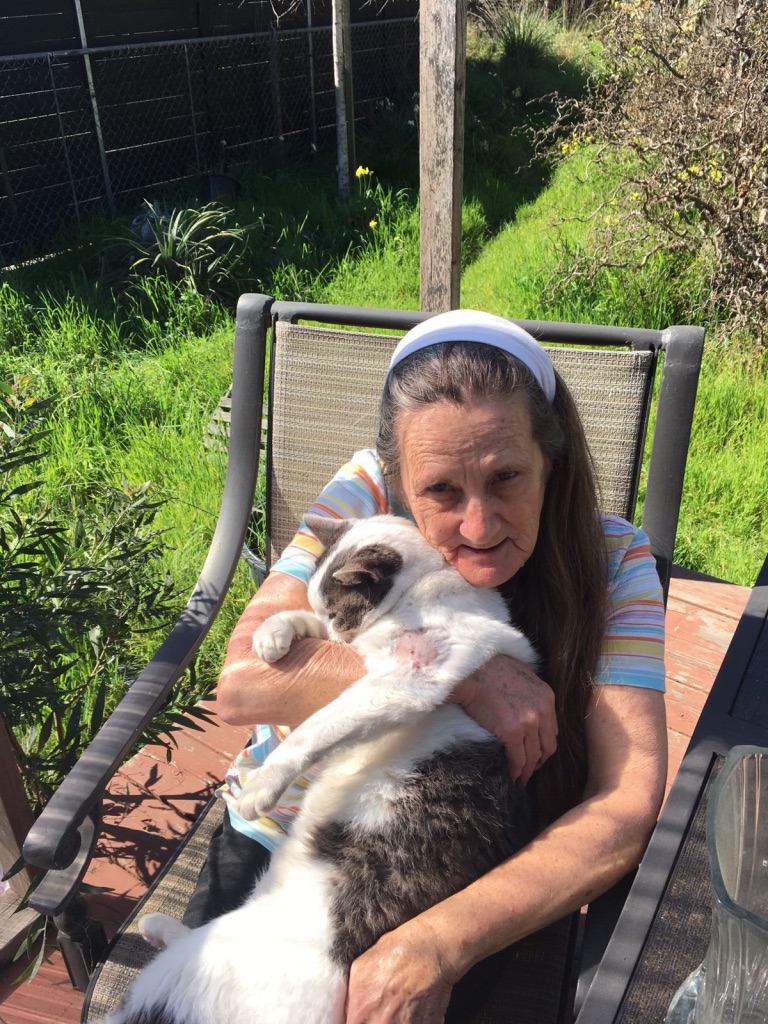
Other tables, other clusters of lubricated camaraderie. Zach makes his way to the outside door, then takes a look back; Nancy is laughing and has her head on Owen's shoulder. What a triumph, really, to be cavorting like that when you're pushing 70! H He bestows his blessing on them both: the years are piling up, and we need to talk; a quiet, postcoital moment is a fine place to start a conversation. Then he lurches soberly out to his car, and drives home to hang out with his cat and grade programs.
- µ 2018